
Choosing a speed dating venue: criteria, checklist, and negotiation
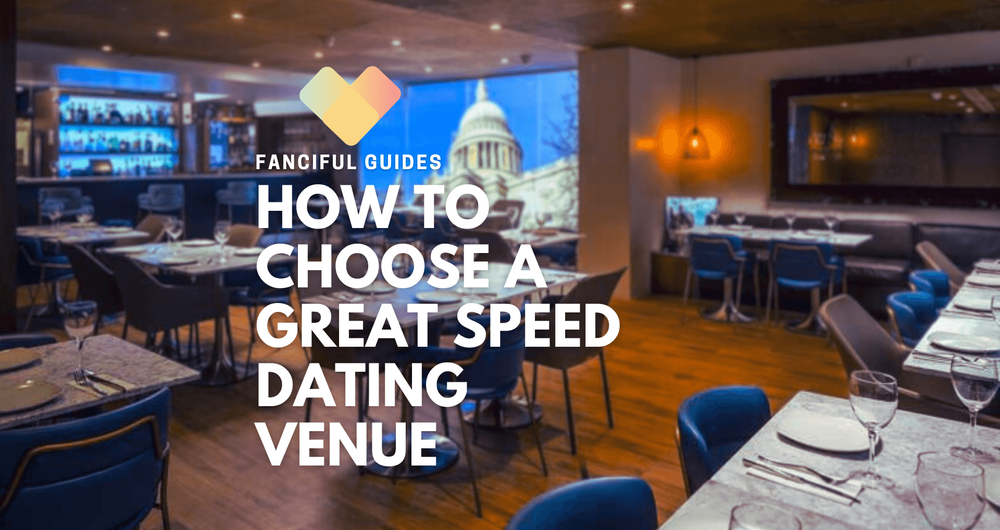
The venue can make or break a speed dating event. Get it right and ticket sales build themselves; get it wrong and your guests remember the room, not the matches. This guide walks through how to evaluate venues against a consistent set of criteria, the on-site checks that flush out problems, and how to negotiate a deal that works for both sides.
What you’re really looking for#
A good speed dating venue ticks five boxes: it fits your target market, is easy to get to, offers a room of the right size and acoustics, has staff who actually want your event, and gives you a commercial deal you can sustain. A venue that wins on four of those but fails on one will still cause you problems — work through all five before you commit.
Step 1: Define your target market#
The venue style must match the demographic on your tickets. Before you look at a single property, decide:
- Age band — 21–30, 30–45, 45+, or a mixed range.
- Income/profession — young professionals, mixed working, older affluent.
- Setting preference — they already drink/eat where on a Thursday night?
That gives you the venue category:
| Target market | Venue style that works |
|---|---|
| 21–30, urban, social | Bright cocktail bar, gastropub, trendy taproom |
| 30–45, professionals | Smart bar, hotel bar, restaurant lounge, members’ club |
| 45+, affluent | Wine bar, restaurant, private members’ club, historic pub |
| Niche (LGBTQ+, faith, hobby) | A venue that already serves the community |
Whichever style you pick, the venue must be well-run with a reasonable standard of décor and facilities — the place reflects on you as the organiser. Always check the toilets, both men’s and women’s. It’s the single best overall measure of an establishment.
If you’re considering a non-hospitality space (a community hall, a co-working venue, a gallery), it can work, but you take on the burden of bringing in refreshments and ensuring comfort facilities are acceptable. Most organisers find the hospitality route easier on a first event.
Step 2: Test accessibility#
Your attendees need to get there easily, on time, and home safely. Score every shortlisted venue on:
- Public transport — within 10 minutes’ walk of a station or major bus stop.
- Parking — on-site or unrestricted within 5 minutes’ walk.
- Late-night route home — well-lit streets, taxis available, station still open after the event.
- Daytime vs nighttime feel — visit the area at 8pm, not 2pm. Some streets that feel fine at lunch are intimidating after dark.
If any of these are weak, expect to lose ticket sales — especially from solo female attendees, who are a substantial part of every speed dating audience.
Step 3: Build a shortlist#
Three tactics work well:
- Walk the street. Pick the high street or bar district that fits your market and walk it end to end on a quiet weekday. You’ll spot venues you’d never find online.
- Google Maps survey. Filter for “bar” or “restaurant” in the right postcode, sort by rating, open the photos. Photos tell you more about the room than any website does.
- Ask your network. Other organisers, venue staff who’ve moved jobs, and your own attendees will point you at places that punch above their weight.
Avoid: chain pubs without a private area, music venues with a hard band schedule, anywhere with a known reputation issue, and rooftop bars (weather risk).
Step 4: Assess the space#
The room itself is the single biggest predictor of how the evening will go. Check:
- Layout — can you fit small tables 1.5–2 m apart with a clear walkway between them? Long thin rooms work; awkward L-shapes don’t.
- Acoustics — soft furnishings absorb sound; hard surfaces (concrete floors, tiled walls, exposed brick) amplify it. If the venue is loud when empty, it’ll be unbearable when full.
- Lighting — warm and even. Spotlights over individual tables are great; harsh overhead fluorescents are not.
- Sight lines — daters should not be able to see other daters’ tables clearly. Some separation (planters, pillars, level changes) reduces the goldfish-bowl feeling.
- Background music — confirm it can be turned down or off. You cannot run a four-minute conversation over a thumping playlist.
How much space do you need?#
A reliable rule of thumb is 4 m² per couple of usable floor space, plus a small area for arrivals and a host station.
| Group size (per gender) | Couples | Minimum floor area |
|---|---|---|
| 8 | 8 | 32 m² + arrival area |
| 12 | 12 | 48 m² + arrival area |
| 16 | 16 | 64 m² + arrival area |
| 20 | 20 | 80 m² + arrival area |
| 25 | 25 | 100 m² + arrival area |
If the room is significantly bigger than this, that’s fine — but you’ll want to be able to corral the tables into one zone so the energy of the event is concentrated.
Step 5: The on-site visit#
Never book a venue you haven’t visited in the evening. On the visit:
- Walk in as if you were an attendee — what’s the first impression?
- Check the toilets (yes, again).
- Stand in the proposed event area at the same time of day your event will run. Is there a kitchen extractor right above? A pool table that won’t be moved? A noisy door that slams every 30 seconds?
- Ask to see the actual tables and chairs you’ll be using.
- Confirm the Wi-Fi password — you’ll need it on the night.
- Meet the manager who will be on shift during your event, not just the events coordinator.
Questions to ask the manager directly:
- How many staff will be on the bar at our start time?
- Can we have a dedicated table or two reserved for arrivals?
- Do you have a microphone or PA we can borrow?
- What’s your last-orders time?
- Have you hosted speed dating or similar before? What worked or didn’t?
Step 6: Negotiate the deal#
Speed dating brings 30–50 paying customers through the door for a 2–3 hour window — pre-booked, mid-week, and not competing with the venue’s regular trade. Lead with that.
There are three deal shapes:
Deal A — no fee, no minimum spend. The venue gets the bar take and you keep the ticket revenue. This is the ideal and is realistic on quiet weekday nights with a venue that needs the footfall.
Deal B — minimum spend behind the bar. The venue guarantees the bar will hit £X. If you fall short, you cover the gap. Acceptable when your average spend per head times your attendee count comfortably clears the minimum. Use the formula below.
Deal C — flat hire fee. Usually a sign the venue doesn’t value the trade you bring. Sometimes unavoidable for prestige venues. Build it into your ticket price and treat it like any other cost.
The minimum spend math#
Before agreeing to any minimum, work out whether your guests will hit it:
expected bar spend = attendees × average spend per head
A reasonable working figure is £15–£20 per head at a bar venue over a 2-hour event (one or two drinks plus tip). So 30 attendees = £450–£600 expected bar spend. Agree a minimum below that figure — never at or above it.
If the venue insists on a minimum spend higher than your realistic expected bar spend, walk away or negotiate it down. Don’t gamble the difference.
Step 7: Secure the booking#
Get it in writing — email is fine, but it must include:
- Date, start time, end time, set-up access time.
- Exact area of the venue reserved (a sketch helps).
- Deal terms (fee / minimum / no-fee).
- Cancellation policy on both sides.
- Named contact and their phone number for the night.
- Any equipment they’ll provide (microphone, signage stand, easel).
Take a single deposit only if asked — never pay the full fee in advance for a first event with a new venue.
The ongoing partnership#
A venue that hosts your event well is worth ten you’ve never used. Treat the good ones as partners:
- Give them a regular slot — first Thursday of the month, say.
- Share photos and tag them on social after each event.
- Ask them to re-share your event posts. Most will.
- Offer them flyer space in your other venues; ask for the same in return.
- Send them their take figures the next day so they can see the value.
A great venue partner will start sending you their own quiet-night requests — “can you do something on the 14th?” — which is when you know the relationship is working.
Red flags#
Walk away if the venue:
- Refuses to commit to staffing levels in writing.
- Insists on a minimum spend you can’t realistically hit.
- Won’t let you visit during evening trading hours before booking.
- Has a history of double-booking event spaces (read recent reviews).
- Has a manager who seems uninterested in why you’re there.
You’ll find a better venue. There are always more candidates than there is time to evaluate them.
Where to go next#
- Hosting on the night → Hosting your speed dating event: a step-by-step run-of-show
- Filling the room → Promoting your speed dating event on social media
- Pricing the ticket → Charges for using Fanciful as an organiser